The City of Orlando is evaluating end‑of‑trip parking for bikes and micromobility—things like bike racks, corrals, parking pads, hubs, bike cages/lockers, charging, repair stations, and supportive streetscape amenities (wayfinding, lighting, shade). The study will identify priority locations, policy updates, and quick‑build work orders to make it simpler to roll to your destination and park securely.
This effort supports the City’s safety, sustainability, and accessibility goals and will produce recommendations for both public right‑of‑way and partner/public or private sites.
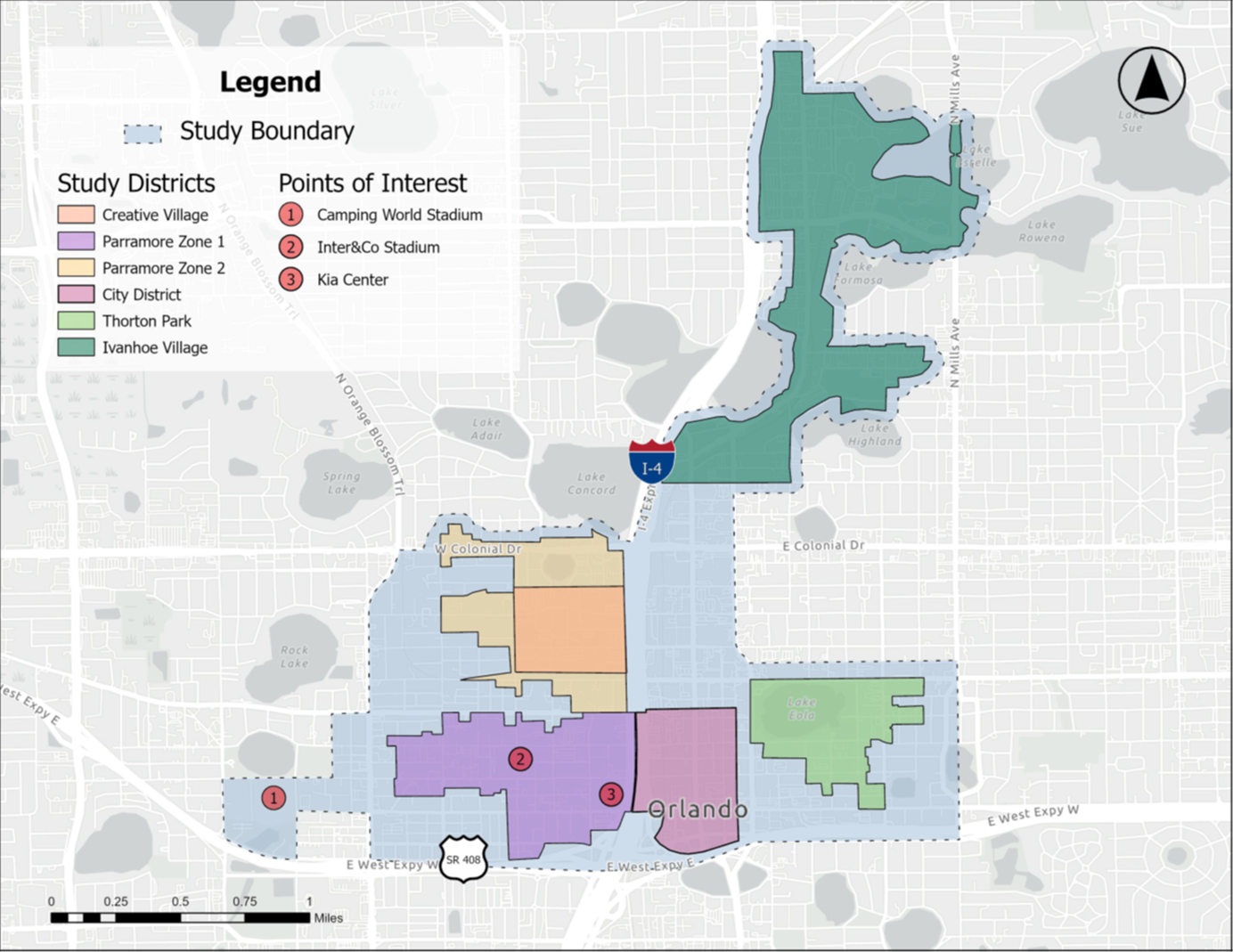
Study Area
This phase focuses on:
Downtown (including the City District and Thornton Park Main Street)
Ivanhoe Village Main Street
Parramore Main Street and Creative Village
Event destinations and mobility hubs serving Camping World Stadium, Inter&Co Stadium, the Kia Center, LYNX Central Station, and other large venues
Background: Micromobility in Orlando
Over the past several years, Orlando has expanded shared micromobility and end‑of‑trip parking to support short, sustainable trips downtown and in activity centers. Key elements of the City’s approach include:
Bike & Scooter Share Program: Orlando permits and regulates dockless bikes and scooters via local ordinance, with a focus on safety, neighborhood compatibility, and clear parking rules. The City designates on‑street parking areas downtown (painted boxes, signed two‑wheel spaces, and racks) to organize devices and keep sidewalks accessible.
Reinvestment in Facilities: A small per‑ride fee collected from operators funds enforcement and oversight as well as building and maintaining micromobility parking areas and other active transportation improvements.
Education & Compliance: Permit holders host recurring safety training classes and share operational data with the City to inform planning and program improvements.
Quick‑Build Delivery: Through the City’s Quick‑Build Project Guide, Orlando deploys low‑cost, flexible materials to rapidly test and deliver improvements. One common installation is a shared micromobility / bike corral, which converts an on‑street vehicle space into organized parking for bikes and scooters.
Benefits of Corrals: Corrals reduce sidewalk clutter, improve visibility at intersections (daylighting), and provide clearly marked places to park—aligning with Vision Zero, access to transit, and downtown mobility goals.
This Bike & Micromobility Parking Study builds on those efforts by inventorying existing assets, identifying gaps, and packaging additional on‑street parking locations for near‑term implementation, while also recommending policies and standards to guide future phases.
The City of Orlando is evaluating end‑of‑trip parking for bikes and micromobility—things like bike racks, corrals, parking pads, hubs, bike cages/lockers, charging, repair stations, and supportive streetscape amenities (wayfinding, lighting, shade). The study will identify priority locations, policy updates, and quick‑build work orders to make it simpler to roll to your destination and park securely.
This effort supports the City’s safety, sustainability, and accessibility goals and will produce recommendations for both public right‑of‑way and partner/public or private sites.
Study Area
This phase focuses on:
Downtown (including the City District and Thornton Park Main Street)
Ivanhoe Village Main Street
Parramore Main Street and Creative Village
Event destinations and mobility hubs serving Camping World Stadium, Inter&Co Stadium, the Kia Center, LYNX Central Station, and other large venues
Background: Micromobility in Orlando
Over the past several years, Orlando has expanded shared micromobility and end‑of‑trip parking to support short, sustainable trips downtown and in activity centers. Key elements of the City’s approach include:
Bike & Scooter Share Program: Orlando permits and regulates dockless bikes and scooters via local ordinance, with a focus on safety, neighborhood compatibility, and clear parking rules. The City designates on‑street parking areas downtown (painted boxes, signed two‑wheel spaces, and racks) to organize devices and keep sidewalks accessible.
Reinvestment in Facilities: A small per‑ride fee collected from operators funds enforcement and oversight as well as building and maintaining micromobility parking areas and other active transportation improvements.
Education & Compliance: Permit holders host recurring safety training classes and share operational data with the City to inform planning and program improvements.
Quick‑Build Delivery: Through the City’s Quick‑Build Project Guide, Orlando deploys low‑cost, flexible materials to rapidly test and deliver improvements. One common installation is a shared micromobility / bike corral, which converts an on‑street vehicle space into organized parking for bikes and scooters.
Benefits of Corrals: Corrals reduce sidewalk clutter, improve visibility at intersections (daylighting), and provide clearly marked places to park—aligning with Vision Zero, access to transit, and downtown mobility goals.
This Bike & Micromobility Parking Study builds on those efforts by inventorying existing assets, identifying gaps, and packaging additional on‑street parking locations for near‑term implementation, while also recommending policies and standards to guide future phases.